Showing posts with label #meded. Show all posts

Saturday, 8 July 2017

Co-delivered #meded with technology - a joint blog with @TrevorKet

There is a drive in healthcare education to use technology and involve patients and service users in teaching sessions. Combining these two important agendas, I collaborated with a healthcare sciences lecturer, Trevor Kettle (@TrevorKet). to co-deliver two teaching sessions using the Meetoo app (and Skype). This a blog of two halves, with my reflections and Trevor's reflections (so do make sure you read both bits!)
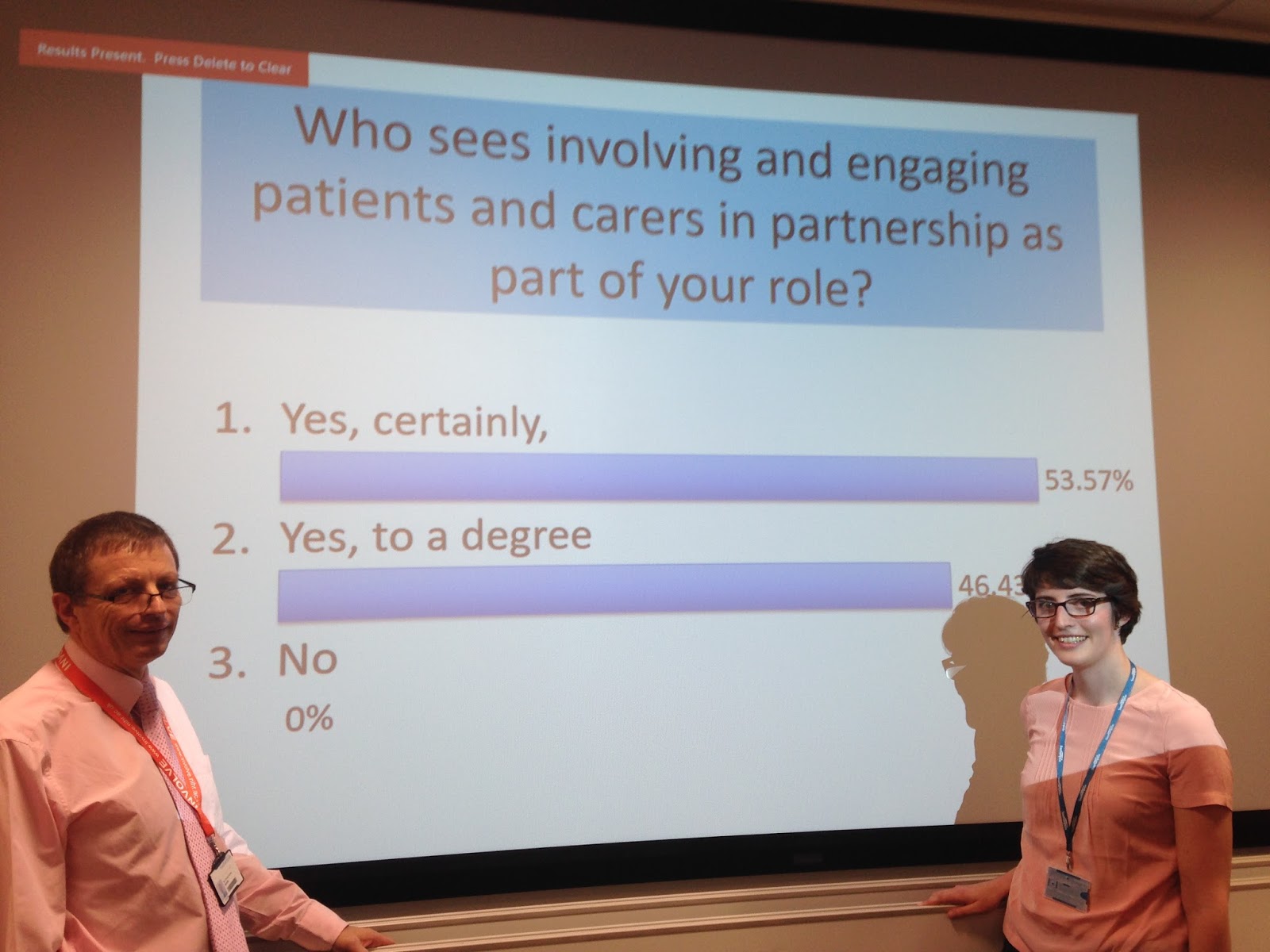


These were students on two different courses at the Faculty of Health Sciences at Southampton University – both post-graduate, qualified health and social care professionals. The sessions were both 1.5 hours, and the first was co-delivered in person, while the second was co-delivered with Trevor Kettle in the room, and me Skyping in. 

The Meetoo App is a platform for real-time polling and discussion that allows students to share their thoughts and reflections, opinions and ask questions.

This blog is a collection of reflections on these experiences. These are twofold:
-       the process of using technology and collaborative teaching as a process to educate
-       the content of the conversation we had with the students.

Underpinning all of this was a strong equal partnership to co-produce the teaching sessions, the content and process between Trevor Kettle and myself – for which I am very grateful. Far from being onerous, this collaboration to coproduce the two teaching sessions required only a preliminary Skype meeting of about an hour and one or two iterations of the PowerPoint slides being shared via email. We had a short reflective debrief afterwards. Trevor’s perspective on it all in included below...

Saturday, 31 January 2015

Q&A from Southampton University Seminar

This week, aided by some very simple technology, I contributed to a seminar at Southampton University with Trevor Kettle about the full scope and continuum of patient involvement.


It was a privilege to talk to the students with a very interactive Q&A session. The questions were really challenging - a good sign! So here are my answers to some of the questions asked...

Monday, 8 September 2014

Self-Management: It isn't just for patients

Last week I had the honour of delivering a lecture at the College of Medicine Summer School, 'Self Care & Resilience: How can we care?'. This blog post is a summary of my lecture.... 


Sunday, 29 June 2014

HEA Powerful Partnerships Summit

On Wednesday this week, I attended the Higher Education Academy's Powerful Partnerships summit in London. It was a day to explore how partnerships (between many different people, but you can guess that I was there championing patient partnerships!) can support and promote excellence in medical and healthcare education in the UK. There were plenty of tweets during the day (#ppsummit) and food for thought. I was asked to present providing a patient perspective on what needs to change in education of health care professionals.

Tuesday, 15 April 2014

The who, what, why, when, where and how of PPI in Meded

I recently had the pleasure of giving the plenary session at the BeSST (Behavioural and Social Scientists Teaching in Medicine) one day conference and AGM. With a brief to explore how patients, carers and members of the public can contribute to medical education, I went down the who, what, why, when, where, how route. As promised, here is a blog to summarise the key points of my plenary session.

Monday, 7 April 2014

Partnerships are possible

I've recently had the privilege of working in a great collaborative partnership with two different professionals: Alf Collins to write an editorial in the BMJ on the Oldham Commission; and Trevor Kettle to co-design and co-deliver workshops on patient and public involvement in healthcare professional education at Southampton University.

I know there is a lot of talk about what it feels like when patients and patient leaders aren't able to work in these kinds of environments, so I wanted to document what is feels like when it does work - to prove it is possible!

Thursday, 19 December 2013

Hugs all round

I have been really struggling to feel festive this year. A bad cold, a couple of rough weeks health wise and a very low mood few weeks certainly haven't helped. But what I have found to so hard in recent weeks is the relentless negativity around the NHS. I don't read the Daily Mail. This negativity is from my Twitter feed - a collection of health care professionals and NHS people who are normally passionate and enthusiastic but overcast with the media portrayal, privatisation and reality of our wards and clinics. 

I know the weather hadn't been great (we've had very few of those wonderfully crisp and fresh winter mornings) and that by Christmas every year everyone feels a bit run down. But this year feels more than that. 

Friday, 30 August 2013

What would I do if I was I was in charge of Day One at Medical School?

As a new university year is fast approaching, I have been thinking abut the messages that our future doctors will be getting on their first day at medical school in a few weeks time.

Thinking back to my first day, aside from the intoxicating mix of fear and excitement, the messages I remember were about how hard the next few years would be and how much science we would have to learn. I really don't remember there being much of a patient focus at all, although I know it was six years ago, and memory can be selective. The first time I met a patient was a few weeks in, in the setting of a GP surgery - exactly how you imagine a patient to be, receiving care. But since being a patient myself, I have realised that patients are more than just a problem to be cured, or a recipient of care, they are their own experts and have capacity beyond the walls of the clinic, to supporting every aspect of healthcare through their involvement. Shouldn't we be introducing our future doctors to this wider potential of patients as resources and colleagues in healthcare? And when better to do it than Day One? 

What would I do if I was in charge of Day One of medical school?